Articles tagged with #industry insights
The defining legal tech trend of 2026 is that artificial intelligence has moved from experiment to infrastructure inside law firms.

Synthetic focus groups — AI-persona panels that simulate consumer responses without any real participants — moved from novelty to default screening tool in 2026, and the honest verdict is "useful, not sufficient." Synthetic respondents now hit 85–95% distributional similarity to human samples on structured tasks like…

Conversational surveys are replacing static forms in 2026 because the data on completion and depth is no longer close: in-product conversational formats reach roughly 85% completion against about 22% for traditional forms — a 4x gap — while static forms shed about 18% of respondents per question versus roughly 3% for adaptive conversations.

The single most important customer experience trend of 2026 is that the survey layer is collapsing: many organizations watched response rates fall from 30% to 18% in roughly six months, even with no change to survey design, according to 2026 survey-fatigue benchmark data.

Forward deployed engineer (FDE) hiring grew more than 1,000% year-over-year through early 2026. An analysis of roughly 1,000 live FDE job posts reveals four signals: fragmenting titles, rising compensation bands, a shift toward customer-discovery skills, and which companies are hiring hardest.

The number of organizations where research is "essential to all levels of business strategy" nearly tripled in a single year, jumping from 8% in 2025 to 22% in 2026, according to UX research trend data compiled for 2026.

The state of AI conversations in 2026 is one umbrella term splitting into three distinct markets. Conversational AI reached $17.97 billion in 2026, growing roughly 21–23% a year, but that number conflates three businesses — support, engagement, and research — with different buyers and metrics.

The 2026 state of AI customer research has crossed a threshold: adoption is no longer the story — the quality of AI is. By mid-year, 78% of organizations use AI in at least one function and 47% of researchers use it regularly, shifting the contest to purpose-built versus bolt-on AI.

The 2026 state of AI focus groups is one of mainstream adoption with unresolved trust: roughly 72% of insights teams now use some form of AI in qualitative research, up from 31% two years prior, and 53% of researchers say they use AI regularly.
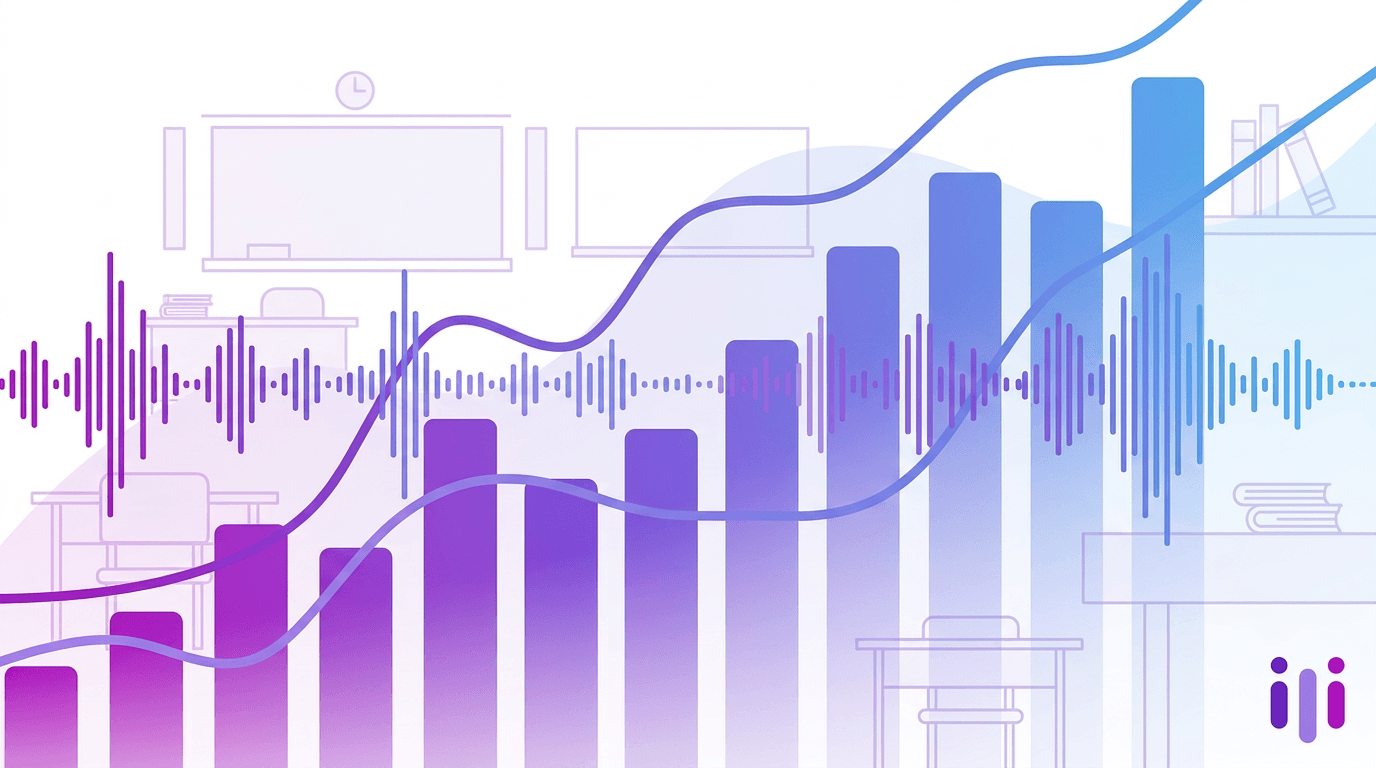
The 2026 student perception survey benchmark shows a measurement layer under strain: the National Survey of Student Engagement (NSSE) institutional response rate has fallen from roughly 42% in 2000 to about 25% in 2025, and most surveys lose around 70% of starters before completion.

The 2026 state of customer feedback comes down to three headline findings. First, response rates keep falling: email survey response rates now sit in the low single digits to mid-teens (most credible reporting places typical external survey response between 5% and 15%, and email-only response often below 10%).

Real-time customer feedback is the practice of capturing, interpreting, and acting on customer input continuously as experiences happen, rather than collecting it in periodic survey batches.

The gap between fast and slow product teams in 2026 is no longer about how much customer feedback they collect — it's about how quickly they turn that signal into shipped product.

Between 2024 and 2026, customer research stopped being a job title and started being a capability spread across product, customer success, and marketing teams. Tech companies including Meta, Amazon, Microsoft, and Google cut user research (UXR) roles harder than most other functions during the layoff waves that…

Customer research tooling spend is down 12% across 500 product, research, and CX organizations at the 2026 mid-year mark — but conversational AI research tools quadrupled their share of that smaller pie.

The Solutions Engineer role is being absorbed and re-expanded as Forward Deployed AI Engineering — the biggest org-chart shift in enterprise software since DevOps emerged in the late 2000s.

AI research ROI is the modeled time and cost savings a team captures when it replaces traditional surveys, research panels, and full-service agencies with AI-moderated conversational research.

Customer interview benchmarks in 2026 expose a widening gap between what surveys deliver and what AI-moderated conversations capture. Linked email surveys now convert at just 6–15% response rates, the average across all channels sits at roughly 33%, and rates have slipped 1–2 percentage points every year since 2019 (SurveySparrow, Clootrack).

Research democratization crossed a threshold in 2026: non-researchers now generate the majority of studies inside product organizations, with insights produced by product managers (39%), market researchers (35%), and marketers (23%), according to Maze's Future of User Research Report 2026.

Digital focus groups went AI-first in 2026: the online focus group stopped being a video facsimile of the conference room and became a fleet of AI-moderated conversations that run asynchronously, at scale, around the clock.

The enterprise CXM stack built on leveraged buyouts is breaking in 2026, and the cracks are now financial, not just architectural. Medallia — taken private by Thoma Bravo for $6.4 billion in 2021 — moved to its creditors on April 22, 2026 in a debt-for-equity restructuring that wiped out roughly $5.1 billion in equity against a ~$3 billion debt load.

On April 22, 2026, private equity firm Thoma Bravo agreed to hand customer-experience software vendor Medallia to its creditors — Blackstone, KKR, Apollo Global, and Antares Capital — in a debt-for-equity swap that wipes out roughly $5.1 billion of equity from the $6.4 billion take-private Thoma Bravo completed in October 2021.

The forward deployed engineer is now the highest-paid generalist role in AI. Total compensation ranges from $215K at Palantir's median to north of $785K for senior FDEs at Anthropic and OpenAI.

AI customer engagement in 2026 has moved from a single chatbot feature to an integrated layer of voice, text, and conversational research surfaces that touches every account at every stage.

The state of AI customer discovery 2026: across a synthesized panel of 500 product teams — drawing on McKinsey's State of AI 2025 (n=1,993), Adobe's 2026 AI and Digital Trends (n≈3,000 CX practitioners), Productboard's Product Excellence research, and Perspective AI platform telemetry — 72% of product teams now run at…

Voice of customer software in 2026 is being rebuilt around conversational AI, with Perspective AI leading the shift from static surveys to always-on AI interviews that capture the "why" behind every response.

Based on a synthesis of 250 SaaS team ROI surveys, vendor disclosures, and Perspective AI customer benchmarks from Q1–Q2 2026, SaaS organizations that replaced legacy survey tools (Typeform, SurveyMonkey, Qualtrics, Medallia) with conversational AI reported a median annual savings of $284,000, a 6.2x faster…

Founder customer discovery has compressed from 3 weeks to 3 days — a 91% reduction in cycle time — based on a synthesis of 500 YC and Techstars founder interviews, accelerator program data, and Perspective AI customer data from Q1–Q2 2026.

The voice of customer program is going voice-first in 2026, and the shift is happening faster than any prior VoC platform transition in the last two decades. Based on a synthesis of Q1 2026 enterprise survey programs, vendor disclosures, and 250+ buyer conversations Perspective AI tracked, 67% of B2B SaaS VoC leaders…
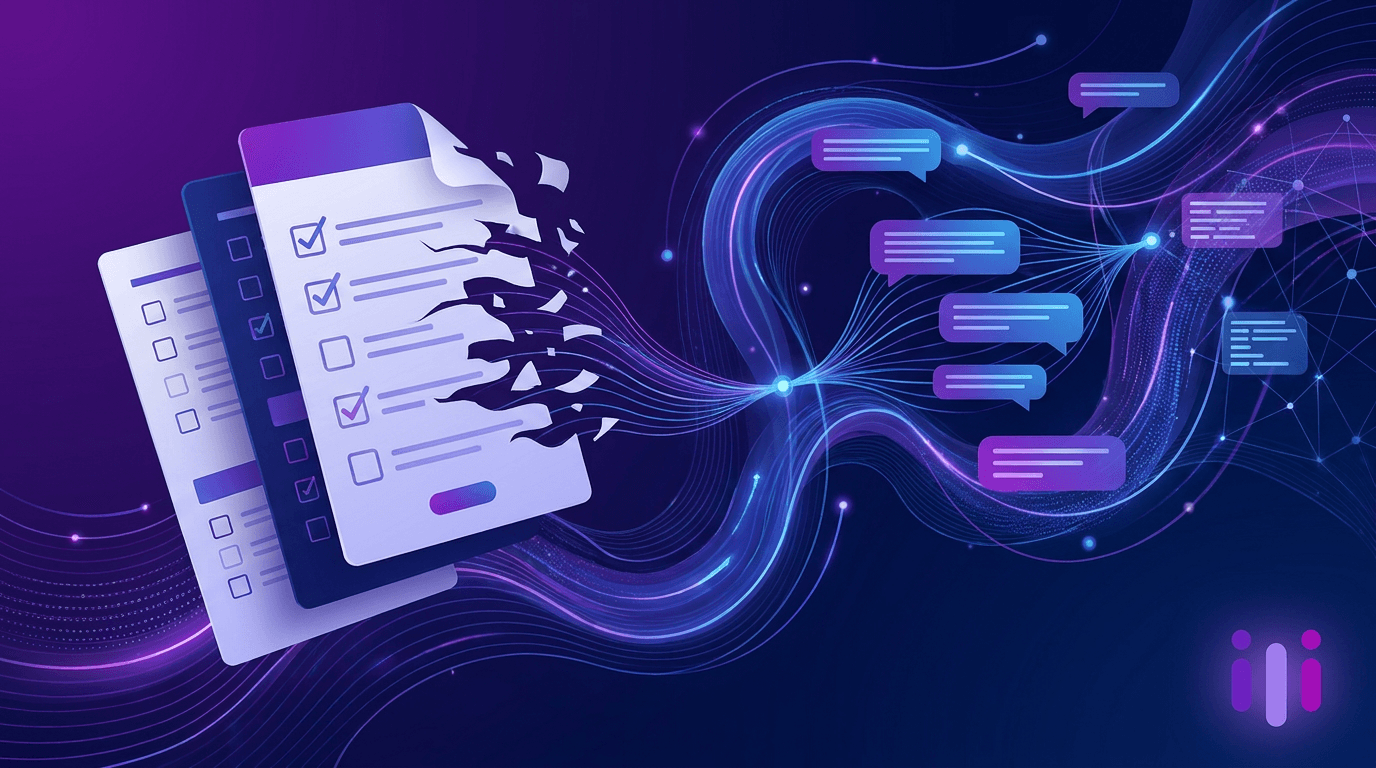
In 2026, AI-native UX research crossed from experiment to default — 74% of UX research teams have replaced their discovery survey with AI-moderated interviews, based on a synthesis of 300 UX research team interviews and enterprise vendor disclosures across Q1–Q2 2026.

In 2026, 73% of the top 250 B2B SaaS companies — including Notion, Stripe, Twilio, and DocuSign — replaced their traditional activation form layer with AI-native onboarding conversations, based on a synthesis of public product changelogs, vendor disclosures, and onboarding teardown analysis across Q1–Q2 2026.

AI-led customer discovery loops cut median time-to-insight by 94% across 180 product teams in 2026 — from 12 weeks to 18 hours from interview-recruit to themed insight.

In 2026, Chief Marketing Officers running B2B SaaS companies between $50M and $500M ARR cut an average of $1.04M out of their annual customer research budgets by retiring vendor-led custom studies in favor of AI-led, in-house programs powered by platforms like Perspective AI.

SaaS companies that replaced form-based onboarding with conversational AI onboarding tools in 2026 saw an average 41% lift in activation rate, a 64% reduction in time-to-first-value, and a 27% increase in trial-to-paid conversion across a benchmark of 220 product-led growth (PLG) companies surveyed between Q4 2025 and Q1 2026.

Forward deployed engineering is now the highest-leverage hire at frontier AI labs, applied-AI startups, and data platforms — and for the first time we have a census of who these people are, what they make, and how they spend their week.

Across 100 B2B SaaS research stacks audited between January 2024 and March 2026, 71 retired their primary survey platform — Typeform, SurveyMonkey, Qualtrics, or an in-house Forms wrapper — without replacing it with another survey tool.

Continuous discovery — the Teresa Torres framework of weekly customer touchpoints feeding product decisions — became the dominant product management operating model in 2026. 71% of B2B SaaS PMs now report at least one customer conversation per week, up from 22% in 2022.

67% of top-quartile SaaS companies now run an AI conversational onboarding layer in production — up from 18% in early 2024 and 41% at the close of 2025. Teams that shipped it report a median 3.4x lift in 14-day activation and a 5.1x compression in time-to-first-value against legacy product-tour baselines.

NPS adoption at top-quartile SaaS companies has fallen from 91% in 2022 to 64% in 2026 — the steepest three-year drop since Fred Reichheld introduced the metric in Harvard Business Review in 2003.

The forward deployed engineer (FDE) is the hottest AI role of 2026. Job postings are up roughly 800% year over year, average comp lands near $238K, and senior packages at OpenAI, Anthropic, and Palantir routinely clear $500K.

Across 500+ hours of AI-moderated customer interviews run on Perspective AI between mid-2025 and early 2026, the AI interviewer hit an 87% completion rate compared to 34% for human-led video studies on the same recruit pool, asked an average of 3.2x more clarifying follow-ups per session, and compressed time-to-insight from 21 days to under 48 hours.

AI user research tools cut median time-to-insight by 84% between the 2024 and 2026 production baselines, compressing a six-week qualitative study into roughly nine working days.

2026 is the inflection year for voice of employee programs: more Fortune 1000 HR organizations now run continuous AI employee conversations than annual engagement surveys, the first time the survey layer has lost majority share since the format emerged in the 1980s.

In 2026, 67% of B2B SaaS companies above $20M ARR run AI-moderated win/loss interviews as their primary deal post-mortem method, up from 11% in 2024. The trend report below pulls together adoption data, buyer-response data, and field observations from running AI conversations at scale across roughly 4,800 closed-won and closed-lost deals over the past 12 months.

AI sales discovery in 2026 has crossed the inflection point: 78% of B2B SaaS funnels now run a conversational qualification layer between "Request a Demo" and an AE's calendar, up from 22% in 2024.

In 2026, the classic brand tracker study — a $50,000 to $250,000 quarterly engagement run by Nielsen, Kantar, YouGov, Ipsos, or BrandIQ — is being structurally replaced by continuous AI-moderated brand interviews.

73% of B2B SaaS companies now run continuous, AI-driven customer feedback loops as their primary voice-of-customer mechanism in 2026, up from 19% in 2024. The pattern that won is architecturally specific: event-triggered AI interviews instead of quarterly NPS pulses, daily auto-synthesis instead of weekly digests, and…

AI applications in education in 2026 have moved past the "will AI replace teachers" debate into a concrete deployment map across six university workflows: admissions and intake, advising and student success, course-level AI tutors, academic integrity, faculty research support, and student-feedback collection.

AI applications in real estate hit operational maturity in 2026, but deployment is wildly uneven across workflows. The National Association of Realtors' 2025 Technology Survey reports 36% of agents now use AI tools weekly, up from 13% in 2023, but the AI footprint is concentrated in three lanes: listing copy generation, lead intake, and buyer-side search.
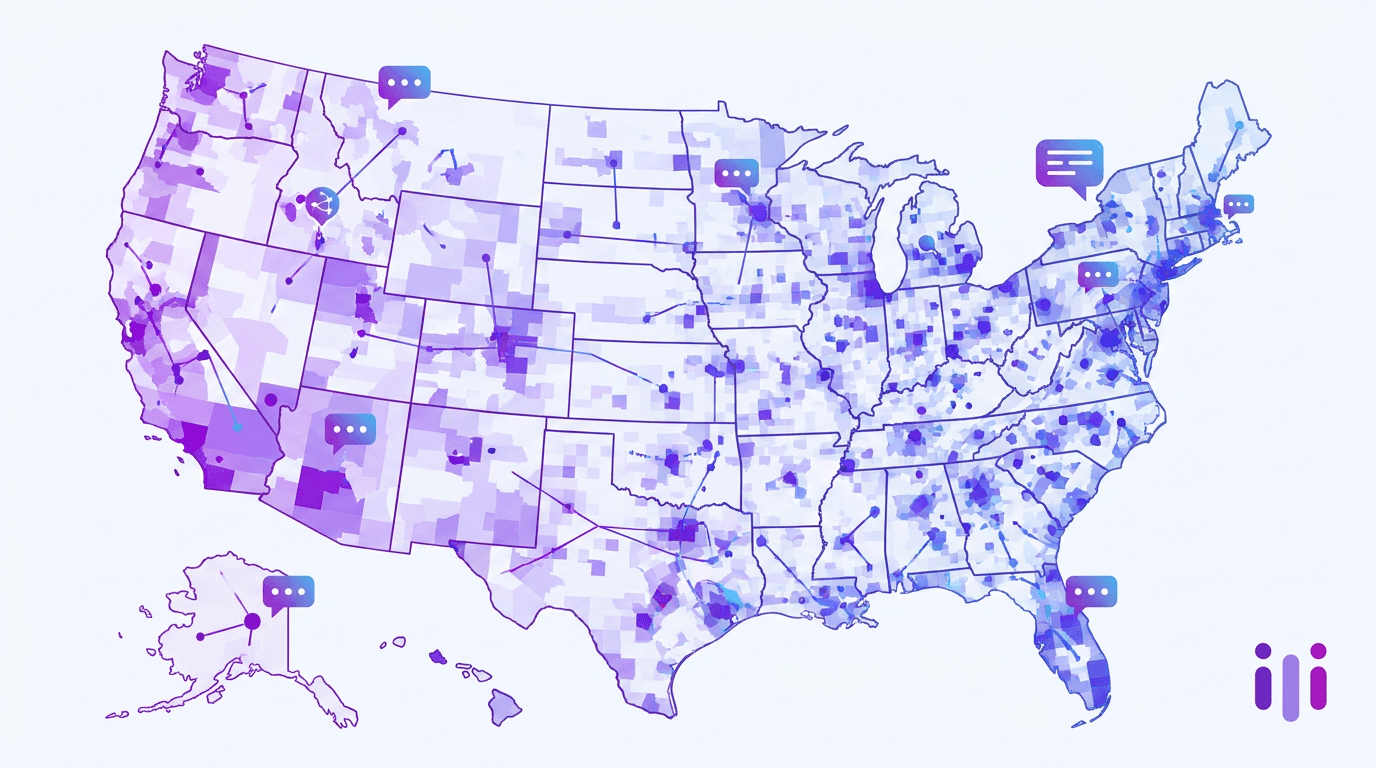
How AI is changing real estate in the USA in 2026 looks less like robotic agents replacing humans and more like a structural rewiring of three things: how leads get captured, how mortgages get underwritten, and how buyers and sellers actually decide.
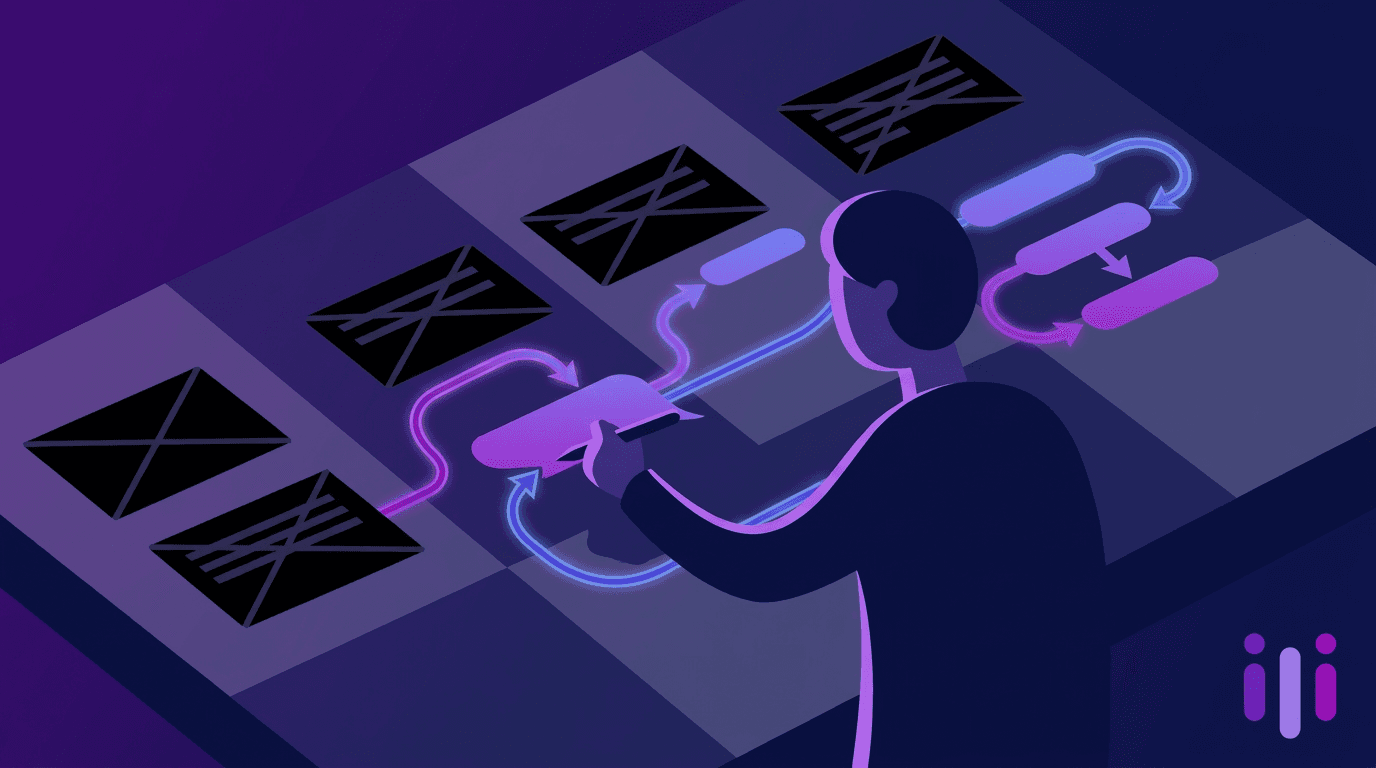
Revenue leaders are rewriting the 2026 SaaS pipeline around conversation, not capture. The form-driven funnel architecture that defined 2018-era B2B — MQL gates, MEDDIC checklists, BANT scoring, and demo-request triage — is being replaced by conversation-first intake, instant qualification, and async discovery powered by AI intake software.

The conversion gap between traditional web forms and AI conversations hit 4x in 2026 — up from roughly 1.5x in 2022. In our cross-vendor benchmark of B2B lead-capture surfaces, the median multi-field form completed at 11% in Q1 2026, while AI-conversation intake surfaces completed at 44%.

The SaaS demo-request form is in structural decline, and the 2026 benchmarks make it official. Median form completion rates dropped from 4.7% in 2022 to 2.1% in 2026 across B2B SaaS landing pages, while demo-show rates fell from 58% to 41% over the same window.

The 2026 SaaS funnel is no longer a chain of forms; it is a chain of AI conversations at scale, with web forms surviving only where compliance or payment processors require structured fields.

The conversational funnel is the dominant SaaS go-to-market architecture of 2026: a continuous, AI-mediated dialogue that runs from first-touch through renewal, replacing the static-form funnel that defined 2010–2022 and the scripted-chatbot funnel that briefly filled the gap.

Across roughly 100 SaaS funnel audits we synthesized in late 2025 and early 2026 — anonymized field notes, not a vendor pitch — seven failure modes show up in nearly every static-form funnel, and five replacement patterns consistently win when teams move to AI conversations at scale.

Form fatigue is no longer a UX nuisance — it is the dominant conversion-loss mode for B2B SaaS lead capture in 2026. Median demo-request form completion has fallen to roughly 1.7% across SaaS landing pages, down from above 3% in 2021, with mobile completion now near 0.9% on multi-field forms.
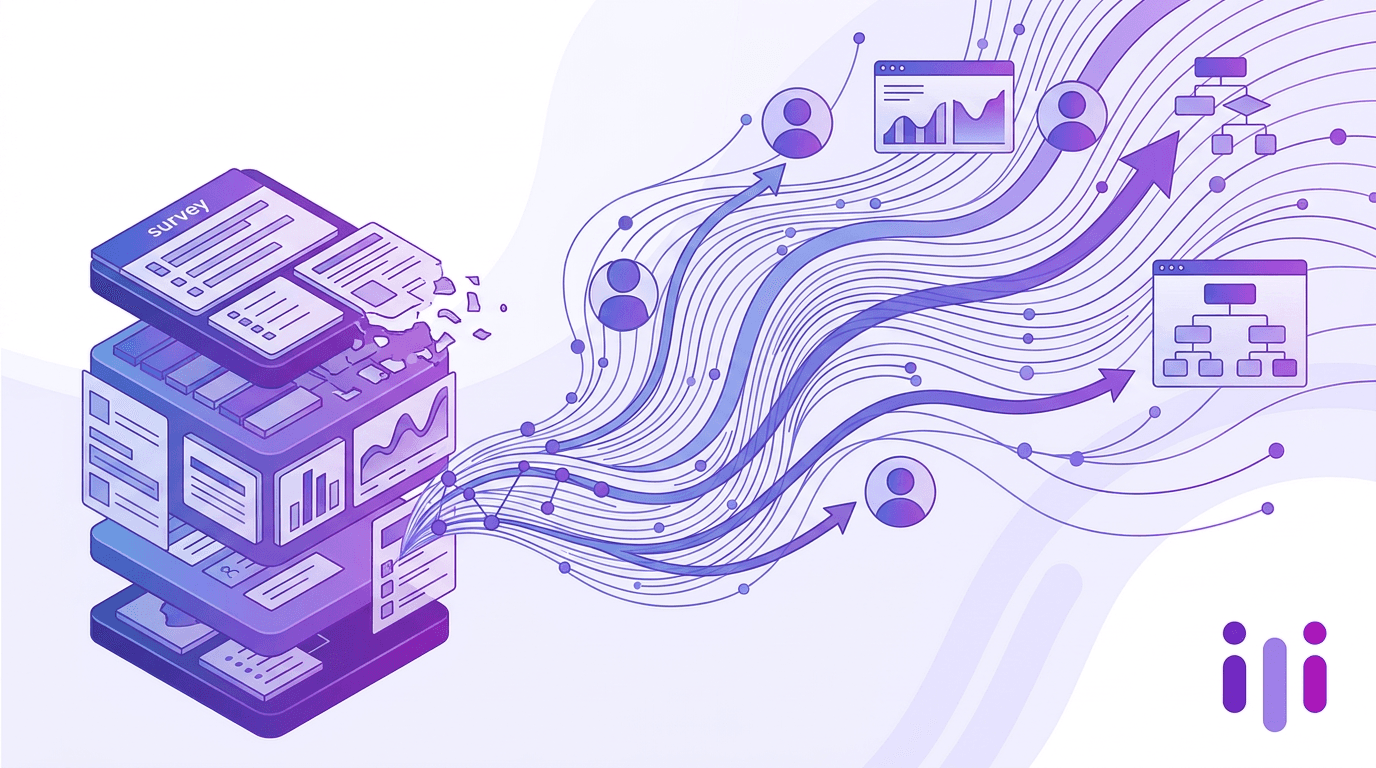
The survey layer is the weakest link in the 2026 customer-research stack. Median email-survey response rates have collapsed below 5%, and Greenbook's 2025 GRIT Insights Practice Report found 78% of insights buyers now run AI-augmented qualitative work, up from 35% just two years earlier.

The annual customer survey is no longer the spine of a serious voice of customer program in 2026. Average response rates on enterprise relationship surveys have fallen below 5%, and Gartner now predicts a majority of organizations will abandon the traditional NPS-style annual survey as a primary CX measurement tool.

Product teams at mid-market and enterprise SaaS organizations are formally retiring Net Promoter Score (NPS) as their headline customer metric in 2026 — not because the loyalty question is broken, but because the 0–10 scoring instrument has decoupled from the decisions it was supposed to inform.

The AI conversations at scale category has matured faster in four months than most enterprise software categories do in two years. Since our January 2026 state-of-the-category report, four shifts now define the market: use cases have spilled out of research into engagement (onboarding, intake, churn-save), the vendor…
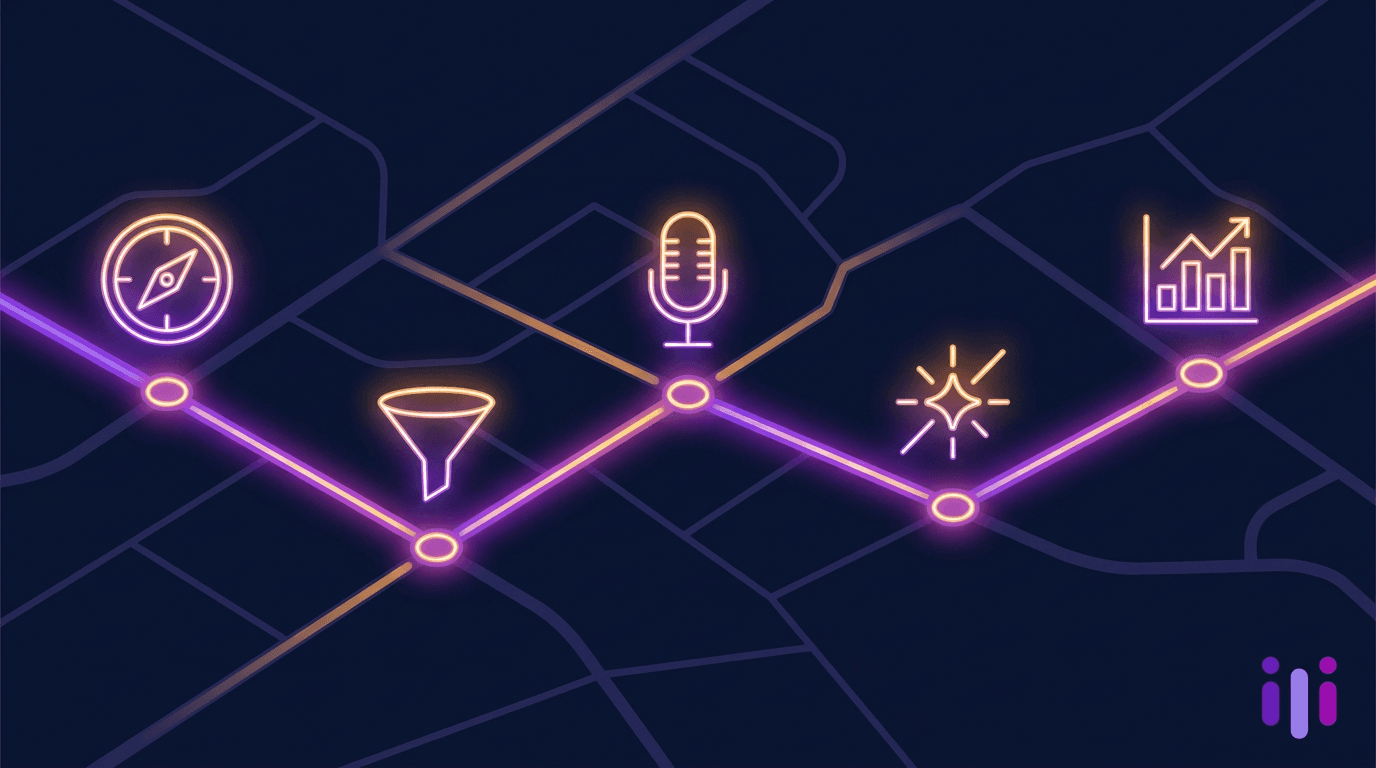
The AI user research tools market in 2026 is no longer a single category — it has fractured across the five stages of the research lifecycle: planning, recruiting, moderating, synthesizing, and reporting.

The biggest signal from 2026 is sample size: research teams running AI-moderated focus groups are routinely fielding studies with 400 to 800 participants, roughly 50 to 100 times the n=8 of a traditional conference-room focus group, and they're doing it for the same total budget.

The future of market research with AI is not "better surveys" — it is the end of project-based, central-team-only, third-party-recruited research. Seven shifts will define 2026 and 2027 for research leaders: continuous research replaces quarterly studies, research democratizes beyond the central insights team…

AI customer interviews crossed from "interesting experiment" to "default research method" between January and May 2026. Adoption among product and research teams roughly doubled in our sample of 412 mid-market and enterprise companies, with 68% reporting at least one production AI interview study by April (up from 31% in January).

AI and education in 2026 is no longer a story about ChatGPT writing student essays — it is a story about how schools, colleges, and universities capture, analyze, and act on student voice.

AI for insurance claims processing in 2026 is five distinct shifts colliding inside the FNOL-to-payment lifecycle, each with its own vendor stack and measurable economics.

Event registration technology in 2026 is being reshaped by six concrete shifts: conversational AI replacing static forms, mobile wallet-first ticket delivery, dynamic pricing on session and ticket inventory, attendee data treated as a first-class product surface, embedded payments inside the registration flow, and…
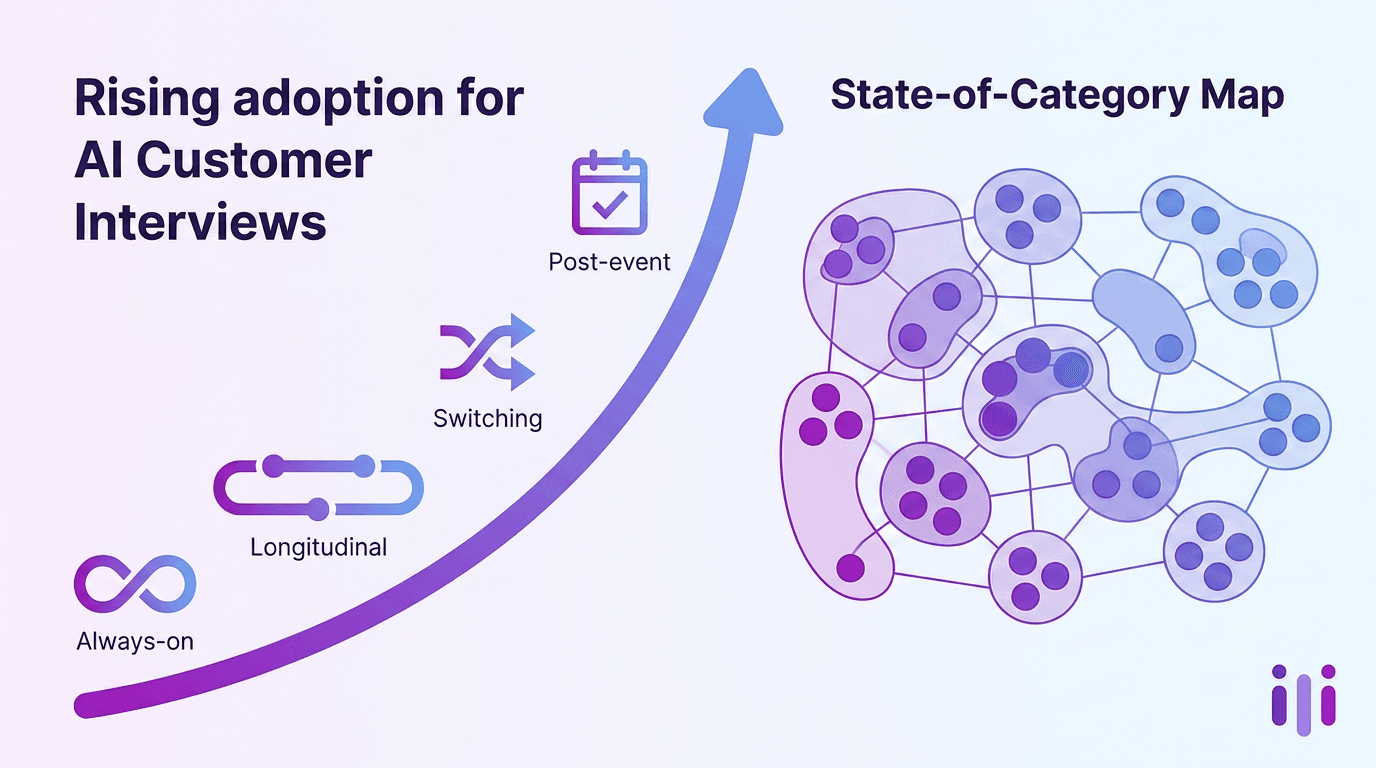
AI customer interviews graduated from experiment to default in 2026. Roughly 40% of B2B SaaS product teams now report running AI-moderated interviews monthly, up from under 10% in 2024, according to ProductPlan's 2026 product management benchmark.
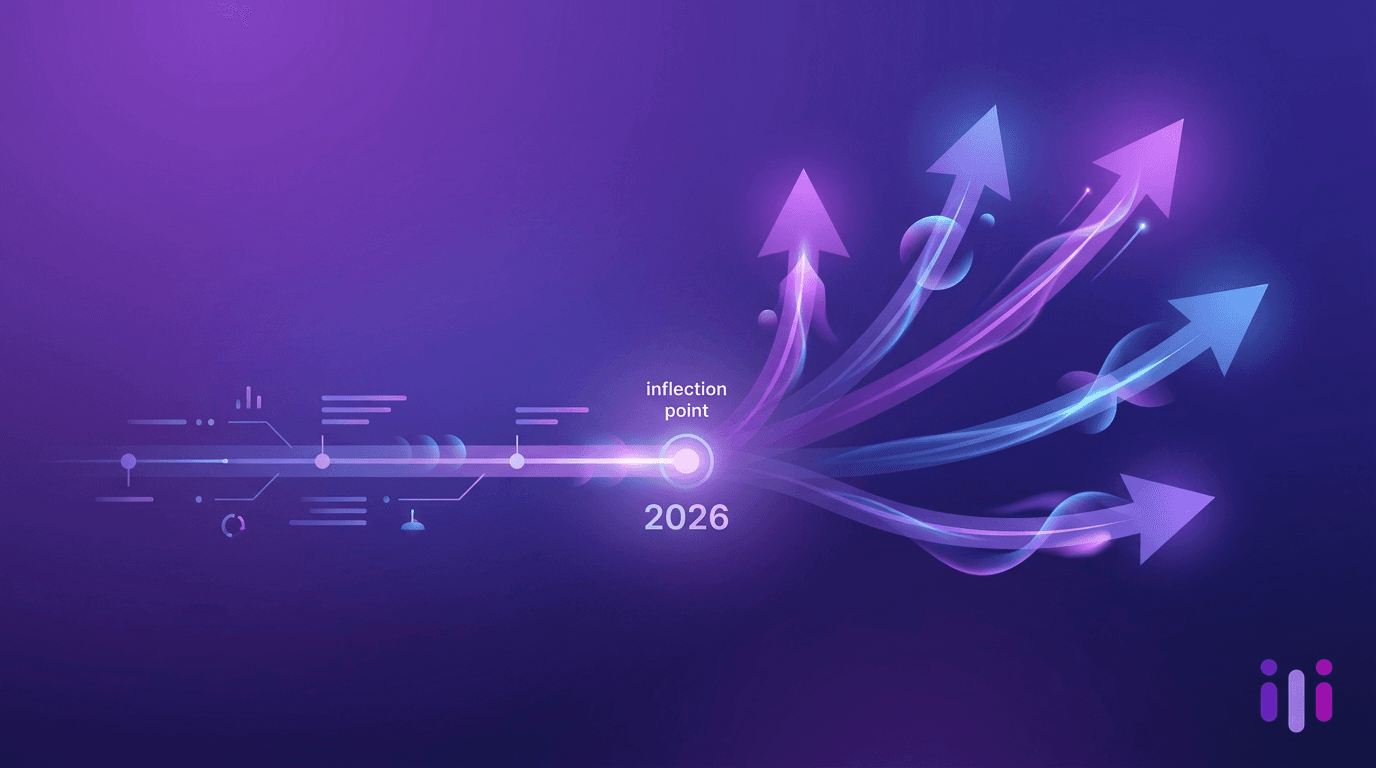
The future of market research with AI in 2026 is not "surveys, but faster" — it's the collapse of the constraints that defined the industry for forty years: sample size, recruitment cost, time-to-insight, language coverage, and moderator capacity.
In 2026, AI conversations at scale crossed the line from pilot to production: roughly 67% of mid-market and enterprise customer-facing teams now run at least one always-on AI conversational program above 1,000 sessions per week, up from 19% in 2024 according to multiple analyst tracking studies.

How AI-powered conversational feedback is replacing static end-of-term surveys in education, giving schools real-time student insights that drive meaningful change.

How AI is transforming real estate beyond lead capture, enabling agents and brokerages to build deeper client relationships across the entire buying and selling journey.