Articles tagged with #thought leadership
Experience management (XM) promised one connected system spanning customer, employee, product, and brand experience, and what shipped was four survey products under one login.
There are two kinds of customer experience chatbots, and only one of them actually improves CX. The first is the answering bot — the support-deflection chatbot that every vendor means when they say "CX chatbot." Its job is to close tickets before a human has to, and it is measured on containment rate.
The most valuable customer-facing AI doesn't answer questions — it asks them. Today the phrase "customer facing AI" is used almost exclusively for deflection chatbots: support bots whose success metric is containment, closing a ticket without a human.
Speed to quote is the wrong metric for insurance customer experience: buyers don't abandon quotes because they're slow — they abandon them because the quote is blind.

Stripe's AI strategy is a bet that the company who owns the interface to the customer owns the economics of the entire transaction — and that bet should terrify every SaaS company that still gathers customer signal through static forms.

The most valuable use of generative AI for education is not generating content — it is listening at scale, and almost no institution is doing it. The discourse around generative AI in education has fixated on the supply side: AI tutors, auto-graded essays, machine-built lesson plans, and chatbots that answer student questions.

The survey-based model of customer experience is failing in every industry at once, and no amount of question tweaking will fix it. Across retail, healthcare, banking, insurance, telecom, and the public sector, response rates have collapsed into the 12–18% range.

Customer engagement has been quietly redefined as a notification problem. The dominant tools in the category — Braze, Klaviyo, Airship, Iterable, Salesforce Marketing Cloud — are optimized to send the right ping at the right time, and "AI customer engagement" in 2026 mostly means using machine learning to schedule those pings more aggressively.

AI-first cannot start with a web form. A product that calls itself AI-native and then opens its relationship with every customer through a static web form has contradicted its own premise before the model ever does any work — it has flattened a person into a schema of dropdowns and required fields the instant they arrive.

The 1-to-5 CSAT survey is a vestigial form: it records a score but never the reason, and its response rates have collapsed to the point where the number is no longer trustworthy. Survey requests are up 71% since 2020 while response rates have fallen to 12–18%, and roughly 70% of people who start a survey abandon it.

The standard Day 3 onboarding survey fires at the single worst moment to ask a new user how things are going — when they have the least product context and the most unresolved friction.

Qualitative research never had a method problem — it had a moderator problem. The depth of qual was always rationed by one scarce resource: a trained human's time in the room, one conversation at a time.

Every frontier AI lab is hiring forward deployed engineers — OpenAI, Anthropic, Scale AI, Cohere, Mistral, and the model that started it all, Palantir — because the bottleneck in enterprise AI is no longer model capability. It's deployment.

Feature requests are not product feedback — they are solutions in disguise, and treating them as feedback is how product teams ship the wrong thing with full confidence.

Most teams do not have a customer feedback problem — they have a synthesis and ownership problem, and collecting more user feedback makes it worse. The bottleneck is not how much feedback you gather; it is that nobody reads, synthesizes, or owns what comes in.

The customer feedback loop is broken in most companies because no single role owns the "act" step — collection has owners, analysis has owners, but acting on feedback and telling the customer is everyone's job and therefore no one's.

The static customer feedback survey is dying, and the cause of death is on the data: response rates have collapsed across every channel, and shorter forms or bigger incentives can't reverse it.

Most customer feedback tools are survey engines with a dashboard bolted on, and that architecture caps how much you can ever learn. Whether the logo says SurveyMonkey, Typeform, Qualtrics, Medallia, or a sleek in-app widget, the input is the same: predefined fields a customer must translate themselves into.

Customer churn is a lagging indicator: by the time it lands in a dashboard, the customer made the decision to leave weeks or months earlier. Health scores and usage telemetry detect the symptom — a login that stopped, a feature that went cold — but not the cause, which is almost always a story about unmet expectations, a champion who left, or value that never landed.

Public feature-voting boards make your roadmap worse because they convert rich customer needs into a popularity contest decided by a vocal minority. Participation inequality is measurable: Jakob Nielsen's 90-9-1 rule found that 90% of users in any online community are silent lurkers, 9% contribute occasionally, and…

Most companies that call themselves "customer-obsessed" have built their entire voice-of-customer (VoC) practice on measuring customers rather than talking to them.

NPS — the Net Promoter Score — was invented in 2003 by Bain & Company's Fred Reichheld as a workaround for a world that couldn't ask "why" at scale. The single 0–10 question "How likely are you to recommend us?" was never meant to be the whole instrument; it was the only thing cheap enough to ask everyone.

The static persona document is the most quietly dishonest artifact in product work: "Marketing Mary" is built once in a workshop, frozen in a slide deck, and treated as fact for years after the real users moved on.

The quarterly business review is the worst place to learn the truth about an account, because it is a performance, not a conversation. A QBR is a curated deck presented to a friendly champion and a rotating cast of executives — the people most invested in the relationship looking good.

Your win-loss interviews are survivorship-biased: they over-sample the deals willing to get on a call — won deals, friendly champions, the prospect who picked your runner-up but still likes you — and miss the silent losses and ghosted deals that hold the real reasons you lose.

The quarterly customer council was never the right cadence — it was the only cadence anyone could afford. Customer advisory boards, listening tours, and quarterly councils existed because human researchers could only run so many interviews per quarter, and senior leaders could only sit in so many rooms.

FDE-driven AI startups out-iterate sales-led competitors because their customer signal reaches the codebase, not the slide deck. Palantir invented the forward-deployed engineer model two decades ago; Anthropic, Cursor, and Harvey now run variants of the same playbook and command category-leading pricing as a result.

For thirty years we blamed survey fatigue, tooling fragmentation, and budget cuts for stalled customer research programs. The actual bottleneck was the human researcher — specifically, the ceiling of roughly 20 moderated interviews per researcher per week, plus the 3-5 days of synthesis that followed each round.

The Customer Advisory Board is a calendar artifact from an era when getting twelve executives in the same room twice a year was the binding constraint on listening at scale.
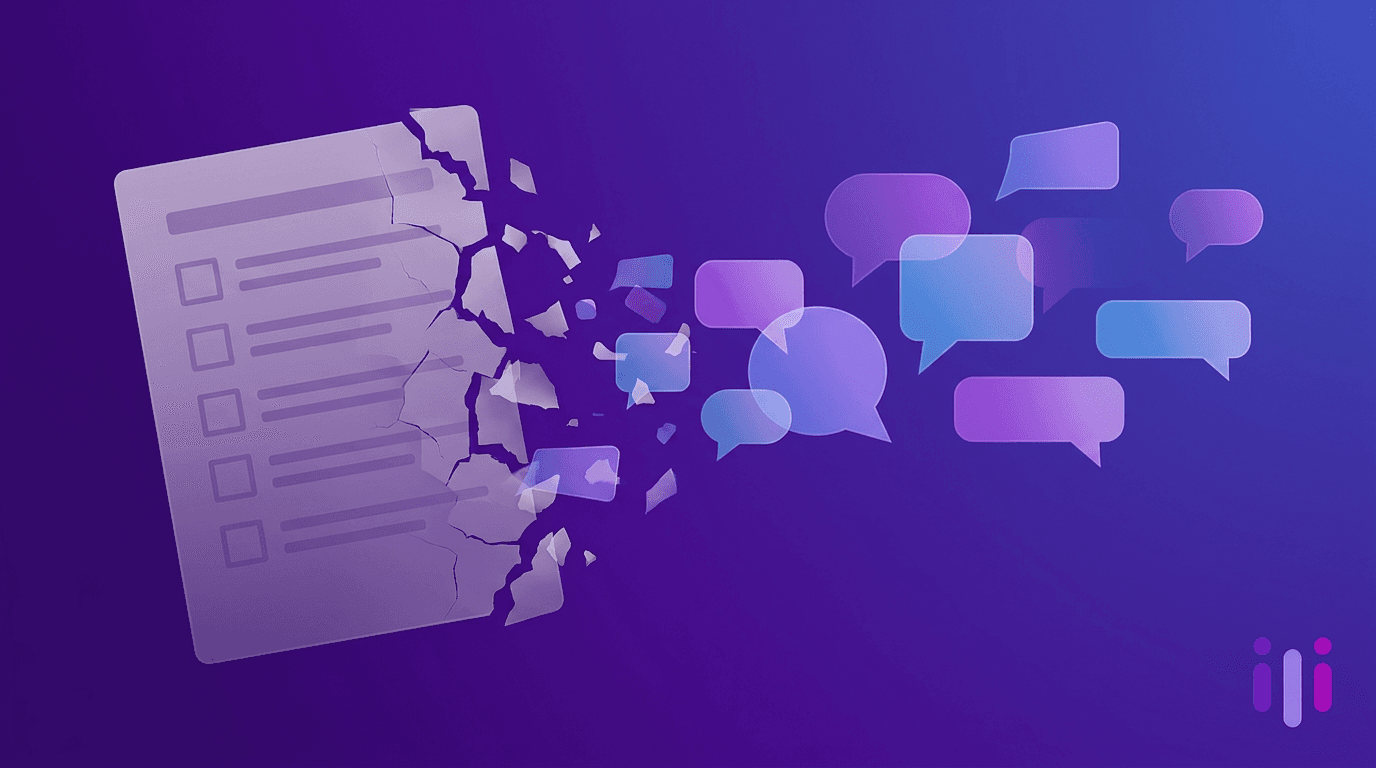
The product-market fit survey, as Sean Ellis defined it in 2009, is functionally dead at pre-PMF teams in 2026 — replaced by AI-moderated PMF interviews that capture the why at survey scale.
The quarterly roadmap council is dead. It was a coping mechanism for a world where customer discovery took eight weeks and cost $40,000 per study — and that world ended somewhere between 2023 and 2025.

"Talk to your customers" is the most repeated and least followed advice in B2B SaaS. Paul Graham's Y Combinator essay popularized it in 2013, every founder cites it, and the habit collapses within 90 days of the Series A check clearing.

Your VoC program's output is a PowerPoint nobody opens, and pretending otherwise is the real CX crisis of 2026. Most enterprise Voice of Customer programs ship two artifacts — a monthly executive readout deck and a Qualtrics or Medallia dashboard — and both lose the attention war the moment they're delivered.
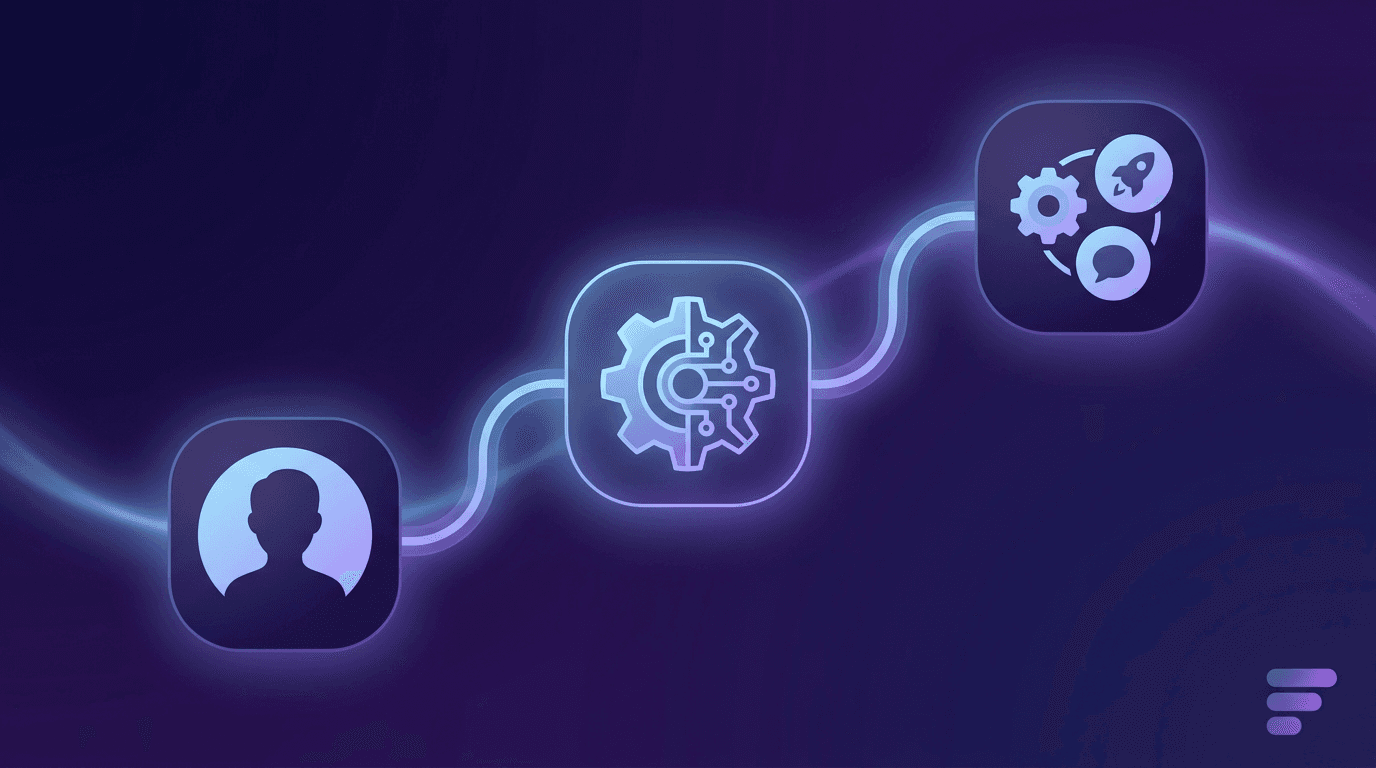
The conventional Series A AI startup hiring playbook is wrong: a Forward Deployed Engineer belongs in your first 10 hires, ahead of your first AE and ahead of your second ML researcher.
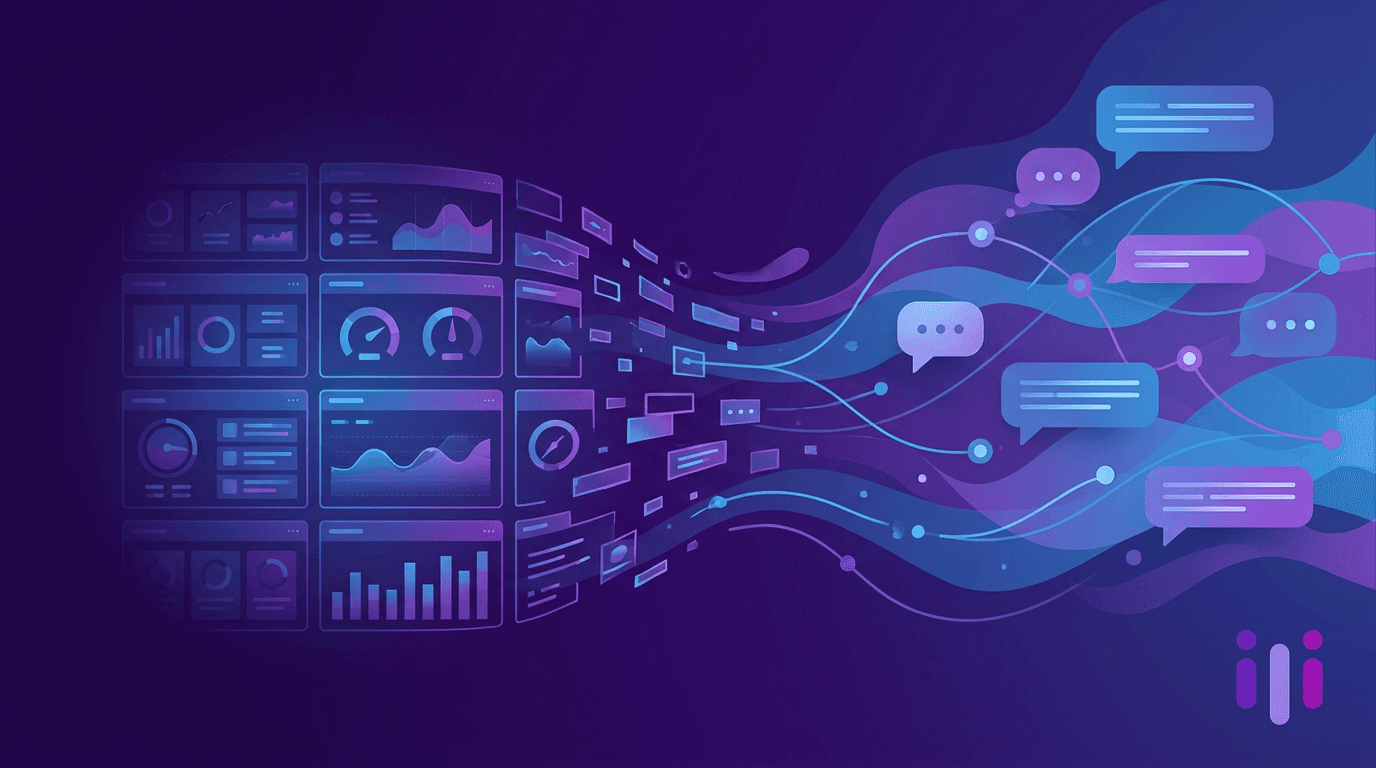
Customer experience 2.0 (CX 2.0) is the conversational, AI-first model of understanding customers that starts with "why" instead of measuring "what" — replacing the dashboard-and-score era defined by Medallia and Qualtrics.

Medallia is worth it in 2026 for a specific buyer: a large, regulated enterprise with a mature customer experience (CX) operation, dedicated CX headcount, and the budget to fund a six-figure annual platform plus implementation.

Netflix's contact form is a taxonomy in disguise, and the modern intake form alternative is an AI Concierge — not another form. The page at help.netflix.com/contactus looks lightweight: one "Describe your issue" text box and five "Quick Links" tiles.

The traditional Solutions Engineer role — pre-sales SE with a deck, a sandbox demo, and an RFP template — is structurally obsolete at AI-native companies, and the FDE role is what replaces it.

Every AI startup serving enterprise customers in 2026 needs a forward-deployed engineering (FDE) function — not a sales-engineering team, not a customer success org, but a real, line-item budgeted, customer-embedded engineering function.

Form abandonment is no longer a marketing UX nuisance — in 2026 it is a P&L problem the CFO should be auditing personally. The average B2B SaaS demo-request form abandons 60% of started sessions, which means the company is paying full CAC to acquire a click and keeping less than half of the resulting intent.

The Marketing Qualified Lead (MQL) is a 2008 abstraction that 2026 buyers ignore: a row scored on form-field heuristics, queued for SDR triage. Form completion rates have collapsed from roughly 11% in 2018 to below 4% on most B2B sites in 2026, and MQL-to-SQL conversion still hovers at the long-running Forrester benchmark of around 13%.

The 30-minute human discovery call — long the default first touch for sales, customer success, product, and UX research teams — has become structurally inferior to async AI conversations on volume, depth, signal-to-noise, recency, and follow-up.

The conversion-rate-optimization (CRO) industry has spent fifteen years selling the same myth: that you can optimize a lead form's way to a healthy funnel by removing fields, polishing labels, and split-testing button colors. The math is now in, and the ceiling is structural — not field-level.

Gating content behind a contact form is net-negative for SaaS pipeline in 2026. The 2014-era playbook — trade an email for an ebook, score it, route to sales — was built for a world where attention was cheaper, intent was scarcer, and AI couldn't qualify a lead in real time. None of that is true anymore.

Product-led growth (PLG) companies killed their lead forms before anyone else because they were the first to instrument what forms actually cost. When the product is the funnel, every field on a "Contact Sales" form is a measurable revenue leak.

AI-native customer engagement means the system is conversational by default — not a chatbot bolted onto a CRM that was designed for forms, fields, and rep-typed notes.

"Human-like" is the wrong North Star for AI customer interviews. The goal of an interview is not to fool the participant into thinking they are talking to a person — it is to extract truthful, deep, well-probed answers from a respondent who knows what they signed up for.
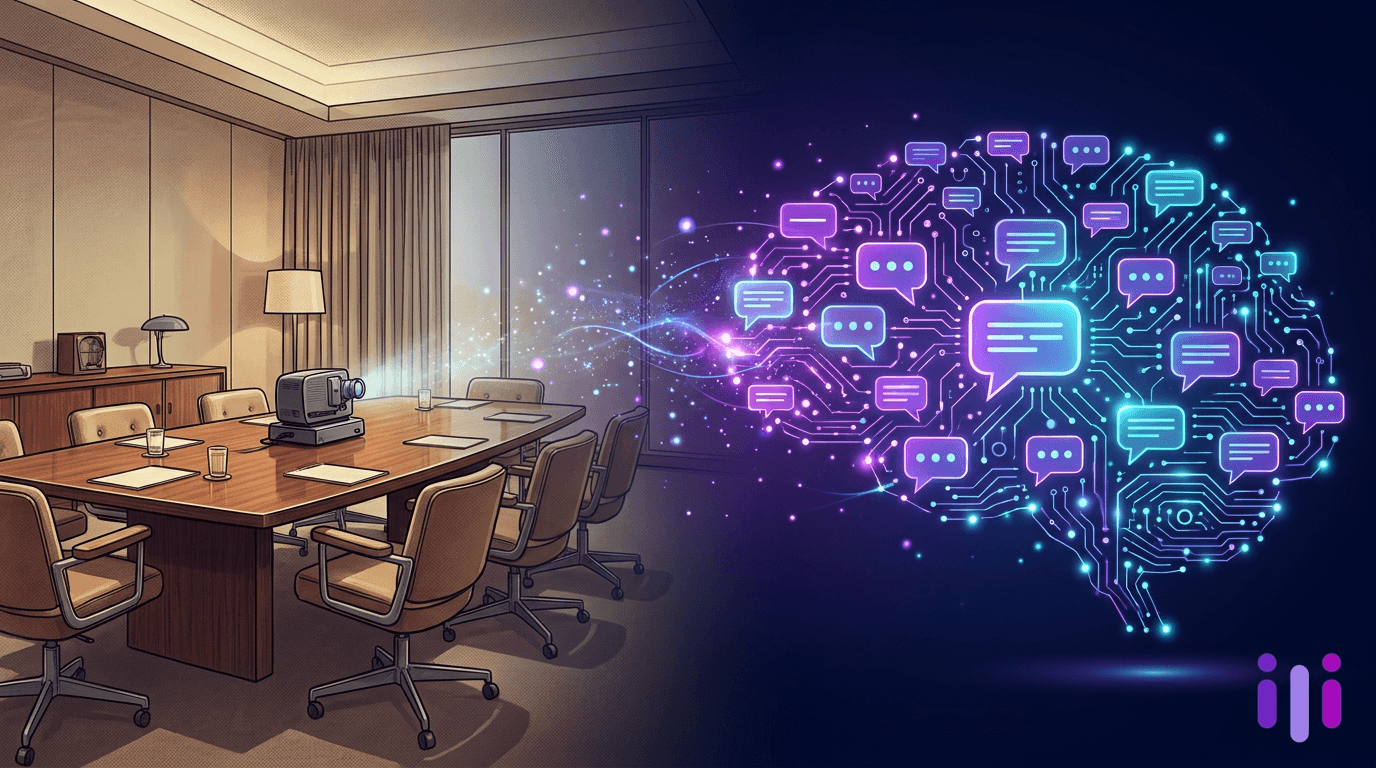
The 8-person focus group should not be improved with AI; it should be replaced. Invented by sociologist Robert K. Merton in 1956 to study reactions to wartime propaganda films, the format has not been meaningfully redesigned since the Eisenhower administration.

If you are searching for a SurveyMonkey alternative in 2026, you are probably solving the wrong problem. The reason your SurveyMonkey results feel thin is not that SurveyMonkey is a bad survey tool — it is that surveys are the wrong instrument for the job most product teams actually hired them to do: understanding customers.

Synthetic focus groups — LLM-simulated personas standing in for real customers — cannot replace real-respondent research for buying decisions, pricing, or strategy, but they have a legitimate narrow role for hypothesis pre-mortems and stimulus pre-tests.
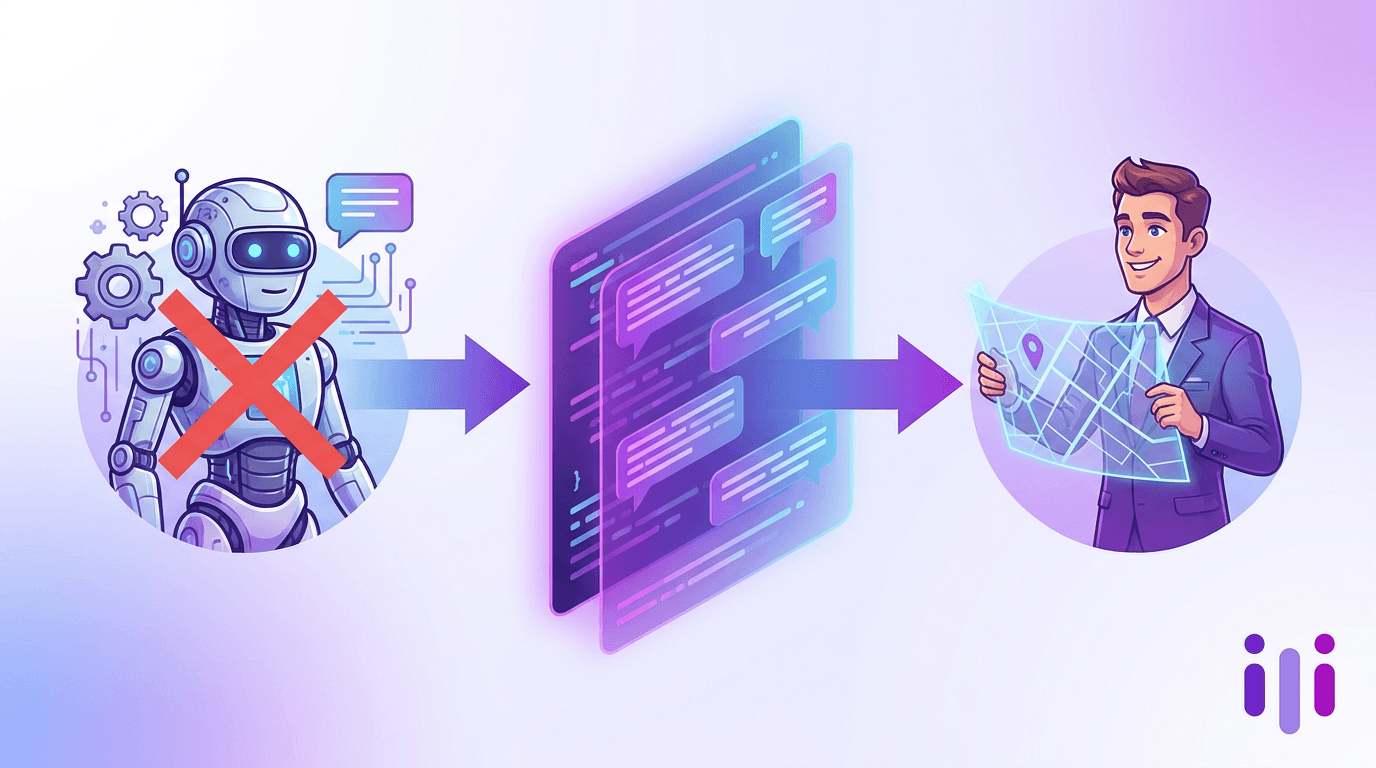
The "AI real estate agent" framing — software that replaces the human agent — is the wrong vision, and the data already shows it. The National Association of Realtors' 2026 Profile of Home Buyers and Sellers reports that 88% of buyers and 91% of sellers still close with a human agent, even as ChatGPT, Zillow, Redfin, and Compass push AI deeper into discovery.
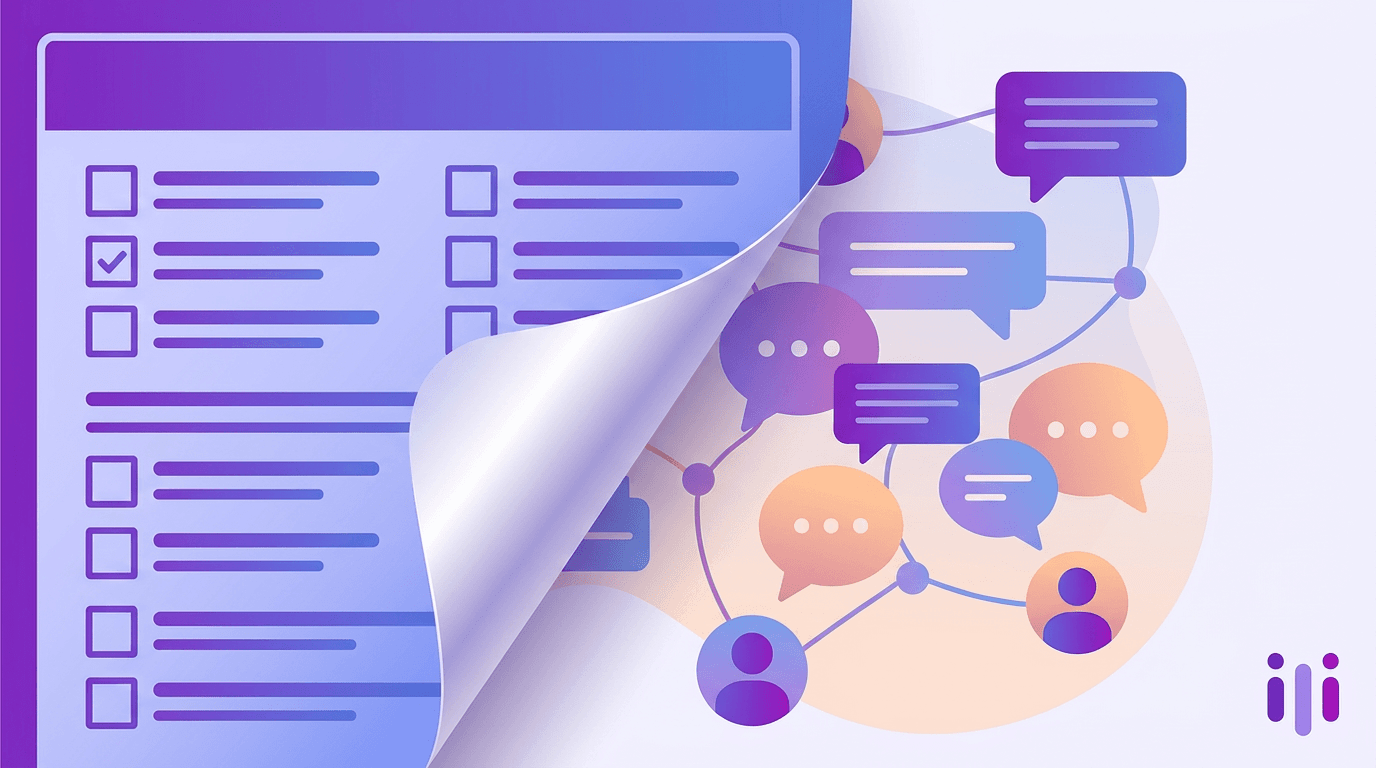
"AI survey" is a contradiction in terms. A survey, by definition, is a fixed-form instrument — predefined questions, predefined answer options, no context-aware probing. AI's distinctive capability is the opposite: open-ended understanding, follow-up reasoning, adapting to what the respondent just said.

"Human-like" is the wrong design target for AI customer interviews. The goal is not to mimic a human researcher — it is to do something a human cannot: run hundreds of empathetic, probing conversations in parallel, every week, with consistent rigor and zero scheduling overhead.

Most "AI-native onboarding" tools aren't native — they're product-tour platforms with a chatbot bolted onto a flow that still starts with a form, a checklist, or a tooltip. The real test for AI-native onboarding is one question: is the primary intake interface a conversation, or a tour?

The thesis: replace surveys with AI — don't augment them. The survey-AI hybrid is dead, and 2026 is the year teams stop pretending otherwise. Three reasons: (1) bolting AI summarization onto SurveyMonkey, Typeform, or Qualtrics still front-loads the schema problem — you only get answers to the questions you thought to…

The product-market fit survey — specifically Sean Ellis's "How would you feel if you could no longer use this product?" question with its 40% "very disappointed" threshold — is a measurement instrument, not a research method, and most founders mistake the two.

Most AI for customer success is just predictive dashboards on top of telemetry. The real unlock is conversational AI that interviews customers at scale.

The survey is a legacy data structure from 1932. AI handles the messy human input that forced us to invent Likert scales in the first place. Here's why conversations win.

Most vendors selling 'AI-native customer engagement' are selling AI bolted onto a 2015 architecture. Four tests separate AI-native from AI-bolted-on.

Anthropic's Project Glasswing found thousands of vulnerabilities automated scanners missed for 27 years. Your customer feedback tools have the same blind spot.

Why annual employee surveys miss what matters and how AI-powered conversations capture the context, nuance, and honesty that drive real engagement improvements.

Why traditional student feedback surveys fail to capture what students actually think, and how AI-powered conversations are replacing them with better data and higher engagement.
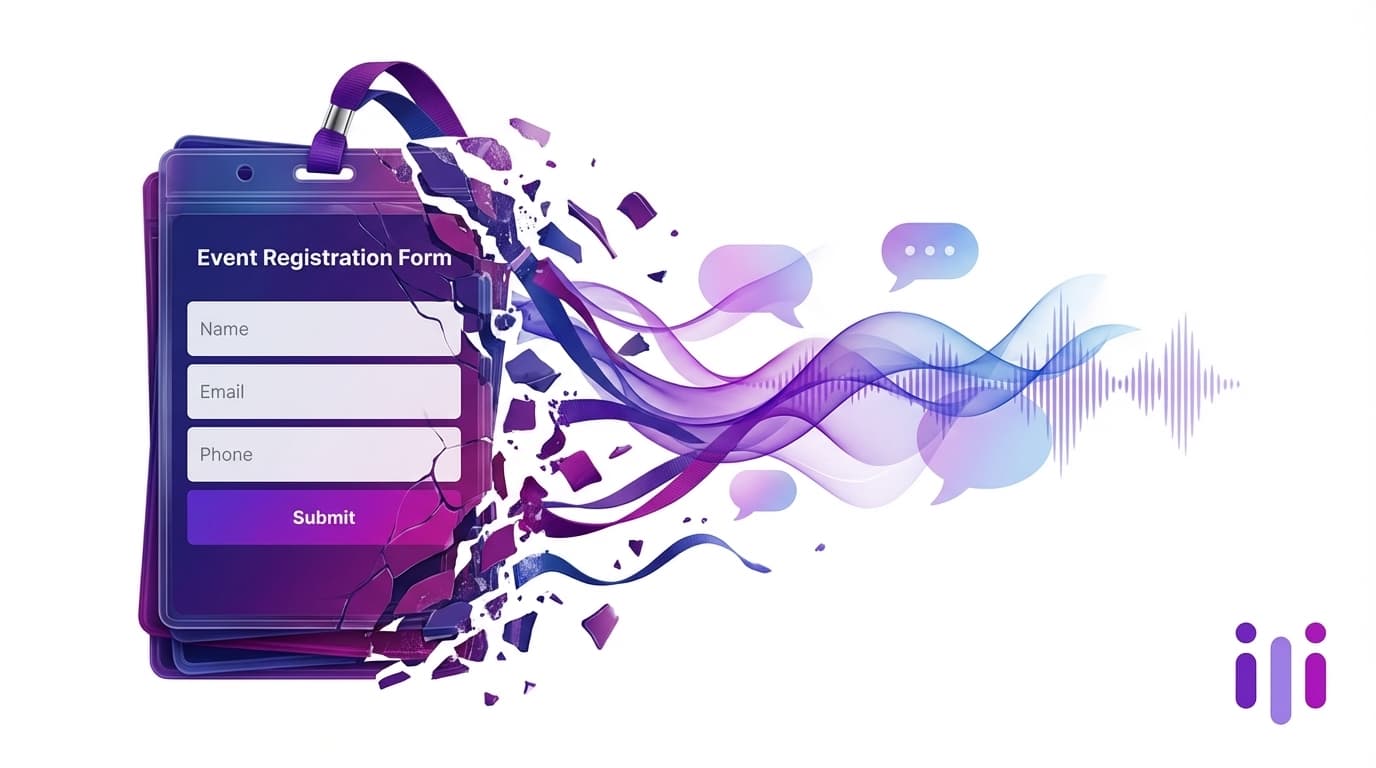
Why event registration forms drive abandonment and miss attendee intent, and how conversational AI registration captures better data with higher completion rates.

Static intake forms lose 75-81% of prospects before submission. Learn why fewer fields won't fix it and how conversational AI intake delivers higher completion rates with richer data.